




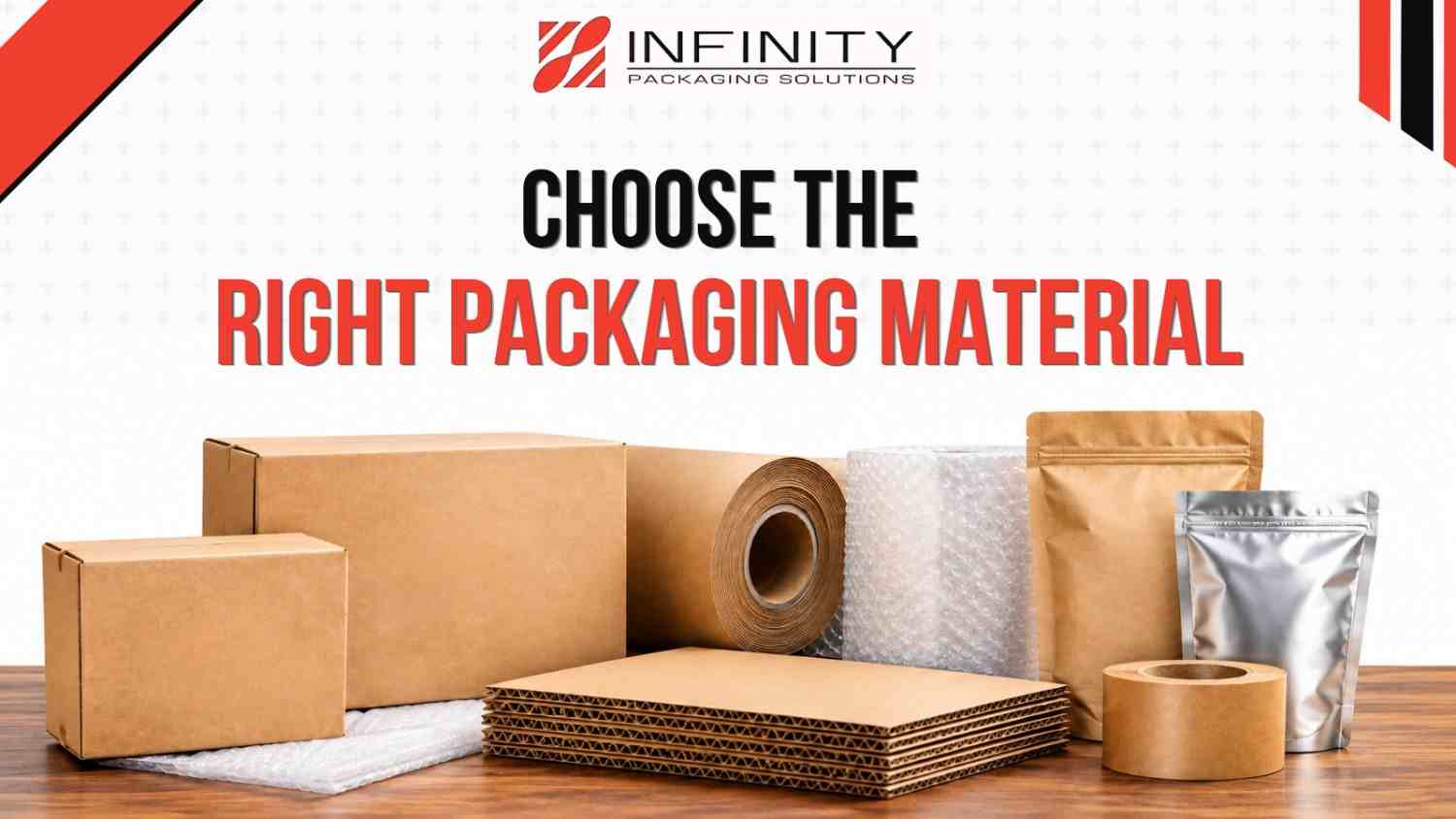
Packaging does more than contain a product. It helps protect products during storage and transportation, supports a positive customer experience, and contributes to how a brand is perceived. With options such as paper and cardboard, plastic, glass, metal, and fiber-based materials, choosing the right packaging material requires more than comparing prices.
The right choice depends on the product, protection requirements, shelf life, shipping conditions, budget, sustainability goals, and brand needs. This guide explains the key factors to consider before selecting packaging materials for a product.
Why Choosing the Right Packaging Material Matters
Packaging provides the first layer of protection against factors such as impact, dust, moisture, heat, and handling. Suitable packaging can help reduce product damage during shipping and storage, while the right design and material can also support a professional customer experience.
Packaging decisions can affect more than product protection. Material weight, package size, durability, and handling requirements can influence transportation costs, waste, returns, and overall packaging expenses.
1. Start With Your Product Requirements
Every product has different packaging needs. Before comparing materials, consider the product’s physical characteristics and how it will be stored, transported, and used.
Ask:
- Is the product fragile, heavy, or lightweight?
• Is it a liquid, solid, or powder?
• Does it need protection from moisture, light, air, or heat?
• Could it leak, break, or become damaged during handling?
• Does it have a short or long shelf life?
These answers help determine the level of protection and barrier performance the packaging needs.
2. Prioritize Product Protection
Packaging may experience drops, vibration, stacking, pressure, and repeated handling during transportation. The selected material and packaging structure should be suitable for these conditions.
For fragile products, options may include corrugated boxes, protective inserts, paper cushioning, foam, molded fiber packaging, dividers, or sleeves. Products that may leak can require moisture-resistant or leak-resistant packaging.
Choosing packaging that matches the product’s protection requirements can help reduce breakage, damage, returns, and customer complaints.
3. Consider Shelf Life and Barrier Needs
Some products are sensitive to air, moisture, light, or temperature. This is especially relevant for food, beverages, cosmetics, pharmaceuticals, and other products where maintaining quality over time is important.
Depending on the product, moisture-resistant or light-blocking packaging may provide useful protection. Consider the conditions the product will face throughout storage and transportation before selecting a material.
4. Compare Common Packaging Materials
Paper and Cardboard Packaging
Paper and cardboard are lightweight, versatile, and easy to customize. Cardboard boxes are widely used for retail products, shipping, food packaging, and e-commerce orders.
Corrugated cardboard can provide useful strength for shipping while keeping package weight relatively low. Paper-based packaging can also provide a clean, straightforward presentation.
Plastic Packaging
Plastic is lightweight, durable, and available in many formats, including bottles, containers, pouches, wraps, and trays. It can provide useful moisture protection for many applications.
When considering plastic, businesses should also evaluate environmental considerations and, where suitable, recyclable or recycled-content options.
Glass Packaging
Glass is commonly used for beverages, food, cosmetics, and personal-care products. It can provide a premium appearance and strong barrier protection and glass can be reused or recycled in many packaging systems.
Its greater weight and potential for breakage during transportation should be considered when evaluating whether it is suitable for a particular product.
Metal Packaging
Metal packaging can provide strength and durability for products requiring a high level of protection. Aluminium and steel are used for cans, tins, and certain industrial applications.
Metal can help protect contents from light, moisture, and air, depending on the packaging format and application.
Sustainable Packaging Materials
Businesses can consider recyclable, recycled-content, compostable, biodegradable, or fiber-based materials depending on the product and application.
Sustainability should be considered alongside product performance. A packaging choice should still protect the product through transportation, storage, and use while avoiding unnecessary material.
5. Evaluate the Total Packaging Cost
Packaging cost is more than the price of the material itself. Consider material, printing and labeling, manufacturing, storage, transportation, packaging labor, product damage, returns, and replacements.
A lightweight option may have a higher material cost but reduce shipping expenses. Similarly, stronger packaging may help reduce breakage and replacement costs. Looking at total packaging value provides a more useful comparison than focusing only on the initial price.
6. Consider Shipping and Transportation Conditions
Packaging must protect the product from the point it leaves your facility until it reaches its destination. Warehouses, trucks, delivery centers, and other handling points can expose packages to impacts, vibration, pressure, stacking, temperature changes, and humidity.
For e-commerce shipments in particular, select packaging that is strong enough for the expected shipping conditions without being unnecessarily large or heavy.
7. Select the Right Packaging Size
Package size affects protection, material use, storage, and shipping. An oversized package may require extra protective material and increase transportation costs, while an undersized package may fail to provide enough protection.
The goal is a package that fits the product appropriately while leaving enough room for necessary protection. Efficient sizing can help reduce material use and improve storage and transportation efficiency.
8. Build Sustainability Into the Packaging Decision
Sustainable packaging is not simply about choosing a material labeled ‘eco-friendly.’ Consider the complete packaging system, including how much material is used, whether it can be recycled or reused, and how customers can dispose of it.
Practical steps can include reducing unnecessary layers, avoiding oversized boxes, using recyclable or recycled-content materials where suitable, reducing package weight, and exploring reusable formats.
9. Match Packaging With Your Brand
Packaging can influence how customers perceive a product. Material, design, colors, finish, and overall presentation can communicate qualities such as quality, reliability, convenience, innovation, or sustainability.
A premium product may require a different packaging approach from an everyday product. The material and presentation should be appropriate for the brand and its target audience.
10. Check Safety and Industry Requirements
Some products have specific packaging and safety requirements. Food, beverages, cosmetics, pharmaceuticals, chemicals, and other regulated products may need packaging that meets applicable standards.
Before finalizing a material, review the requirements that apply to the product and the markets where it will be sold. Packaging should be safe, suitable for the product, and capable of maintaining product quality.
11. Test Packaging Before Full Production
Do not finalize packaging based only on appearance or price. Create samples and test them before placing a large order.
Check whether the packaging can protect the product from damage, handle transportation, withstand stacking, prevent leakage where relevant, maintain product quality, open easily, and be stored efficiently.
Testing can reveal practical issues before large-scale production and help reduce avoidable costs.
12. Consider Your Packaging Supplier’s Capabilities
An experienced packaging supplier can help businesses compare material options, understand cost considerations, develop samples, and refine packaging requirements.
When evaluating a supplier, consider product quality, available materials, customization capabilities, production capacity, lead times, testing support, and sustainability options. The right supplier should be able to understand the product and its practical requirements.
Final Thoughts
Choosing packaging material requires a balance between product protection, shelf life, transportation, size, cost, sustainability, and brand presentation. Paper and cardboard, plastic, glass, metal, and sustainable materials can all be useful depending on the product and application.
Rather than selecting packaging based on one factor, compare how each option performs across the full product journey. Test the packaging before full production and work with a supplier that can help address the practical requirements of your application.
Frequently Asked Questions
Q. How do I choose the right packaging material for my product?
Start with the product’s size, weight, fragility, shelf life, protection requirements, shipping conditions, budget, sustainability goals, and brand needs. Then compare materials against those requirements.
Q. Which packaging material is suitable for fragile products?
Corrugated packaging with suitable inserts or cushioning is commonly used for fragile products. The appropriate solution depends on the product’s size, weight, and level of fragility.
Q. Is cardboard a good packaging material?
Cardboard is lightweight, versatile, customizable, and suitable for many retail, shipping, food, and e-commerce applications. The appropriate grade and structure depend on the product and shipping conditions.
Q. What should I consider when choosing sustainable packaging?
Consider material use, recyclability, recycled content, reusability, and practical disposal options. Sustainability should also be balanced with the packaging’s ability to protect the product.
Q. Why is packaging testing important?
Testing helps determine whether packaging can protect a product during transportation, storage, and handling. It can help identify issues such as breakage, leakage, product damage, or inefficient storage before larger production runs.