




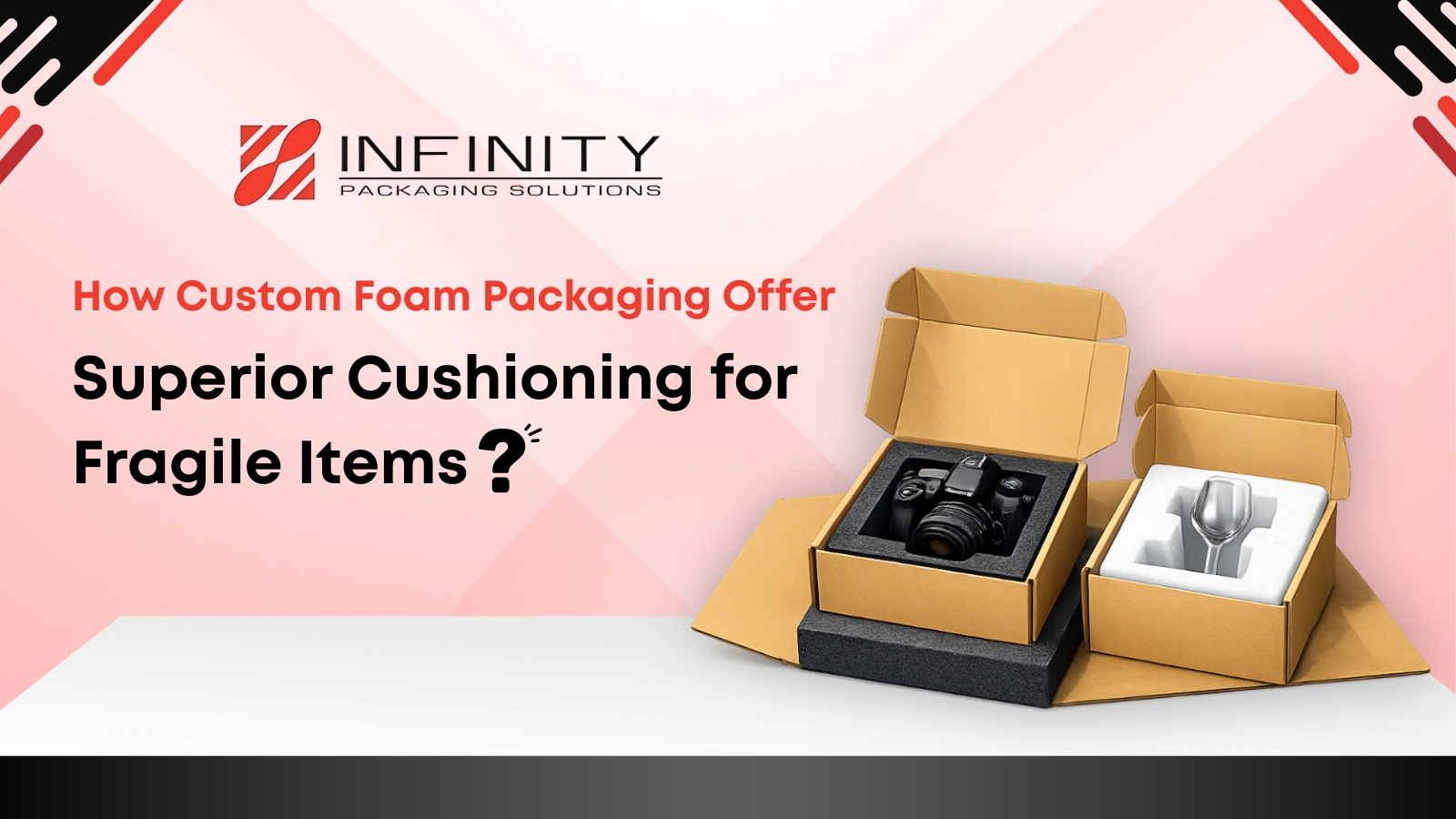
When fragile products break in transit, the impact goes far beyond the damaged item. It leads to costly returns, disrupted supply chains, and reduced customer trust. In today’s competitive B2B logistics environment, fragile product protection is no longer optional – it is a business requirement.
That’s why more brands are switching to custom foam packaging.
Unlike generic fillers, foam cushioning solutions are designed to fit, protect, and perform. They absorb shock, reduce movement, and keep delicate products safe from factory floor to final delivery. For brands handling electronics, medical devices, cosmetics, or precision components, the right protective foam packaging can mean the difference between repeat orders and costly returns.
This guide explains how custom foam inserts deliver superior cushioning materials, why they outperform standard packaging, and how businesses can use tailored foam packaging to improve safety, efficiency, and credibility.
Why Fragile Products Break During Transit?
Most fragile goods fail in shipping for one primary reason:
Uncontrolled Movement Inside the Box
During shipping, packages face:
- Drops from conveyor belts
- Sudden impacts during loading
- Constant vibration over long distances
- Compression from stacked cartons
Standard void fillers shift under pressure. Bubble wrap deflates. Loose paper collapses. None of these provide consistent shock absorption packaging.
Packaging for fragile goods must do three things well:
- Hold the product firmly in place
- Absorb impact energy
- Maintain shape over time
This is exactly what custom cushioning solutions are engineered to do.
What Is Custom Foam Packaging?
Custom foam packaging is purpose-built protection designed around a specific product’s size, weight, and fragility. Instead of forcing a product to fit a box, the packaging is built to fit the product.
It often includes:
- Custom foam inserts
- Precision-cut cavities
- Multi-layer foam systems
- Anti-static or moisture-resistant materials
As a trusted B2B packaging manufacturer, InfinityPak develops custom foam box design solutions that support both protection and presentation. Each design focuses on fragile product safety, not just filling space.
Why Foam Cushioning Outperforms Traditional Packaging Materials
The Science Behind Foam Shock Absorption
Foam works because it manages energy. When impact occurs, foam compresses and spreads the force across its structure. This reduces the energy transferred to the product.
High-performance cushioning foams such as:
- Polyethylene (PE)
- Polyurethane (PU)
- EVA Foam
Superior cushioning materials like polyethylene (PE) and polyurethane (PU) foam are engineered with controlled density. This allows them to:
- Compress without collapsing
- Return to original shape
- Maintain long-term performance
This makes industrial foam packaging ideal for repeated handling and long-distance shipping.
Foam vs Traditional Packaging Materials
| Packaging Material | Shock Absorption | Shape Retention | Long-Term Protection | Custom Fit |
| Bubble Wrap | Low–Medium | Poor | Weak | No |
| Paper Fill | Low | Poor | Very Weak | No |
| Air Pillows | Medium | Poor | Weak | No |
| Protective Foam Packaging | High | Excellent | Strong | Yes |
Industry data shows that businesses using custom foam padding experience up to 45% fewer in-transit damages compared to loose fill methods.
How Custom Foam Inserts Improve Fragile Item Protection?
1. Precise Fit Eliminates Movement
Loose movement causes micro-impacts. Over time, these lead to cracks, scratches, and internal damage.
Custom foam inserts are cut to exact product dimensions. This locks items in place and creates consistent fragile item protection across every shipment.
2. Multi-Directional Shock Absorption
Drops rarely happen straight down. Impacts come from corners, edges, and sides.
Shock absorption packaging made from foam absorbs force from all directions. This protects sensitive components such as screens, lenses, and internal circuitry.
3. Layered Protection for Delicate Products
For high-value goods, packaging for delicate products often uses layered foam systems:
- Soft inner foam for surface protection
- Firm outer foam for structural support
This combination enhances product safety packaging without increasing box size.
Types of Foam Used in Custom Cushioning Solutions
Different products require different foam properties. Leading B2B packaging manufacturers select materials based on performance, not cost alone.
Common Foam Types
| Foam Type | Key Benefit | Best Use Case |
| Polyethylene (PE) | High impact resistance | Electronics, tools |
| Polyurethane (PU) | Soft cushioning | Cosmetics, glassware |
| EVA Foam | Premium finish | Luxury and retail |
| Anti-Static Foam | Static control | Circuit boards |
Each option supports custom cushioning solutions tailored to the product’s risk profile.
Packaging for Fragile Goods in B2B Supply Chains
B2B logistics demand consistency. One damaged shipment can disrupt entire operations.
Industrial foam packaging supports:
- Bulk shipping
- Long storage periods
- Multi-stage distribution
According to a 2025 logistics study, packaging failures account for nearly 30% of B2B product damage claims. Businesses using premium foam packaging significantly reduce these losses.
Custom Foam Packaging as a Brand Differentiator
Protection is only part of the story.
Well-designed custom foam box design also improves:
- Unboxing experience
- Brand credibility
- Perceived product value
A clean, precise foam layout signals professionalism. It shows attention to detail. For high-end products, this matters.
Tailored foam packaging reinforces trust before the product is even used.
Sustainability and Modern Foam Packaging
Sustainability concerns are shaping packaging decisions.
Modern custom foam packaging now includes:
- Recyclable foam options
- Reduced material waste through precision cutting
- Reusable foam systems for returns
Well-designed protective foam packaging often uses less material than oversized boxes filled with waste fillers. This supports environmental goals without sacrificing fragile product safety.
How to Choose the Right Foam Cushioning Solution?
Selecting the right custom cushioning solutions requires clarity.
Key Factors to Consider
- Product weight and fragility
- Shipping distance and handling frequency
- Environmental exposure
- Storage duration
Working with an experienced B2B packaging manufacturer ensures these factors are addressed early.
Actionable Steps for Businesses
- Audit current damage rates
- Identify high-risk products
- Test custom foam inserts on sample shipments
- Measure performance improvements
- Scale successful designs
These steps turn product safety packaging into a strategic advantage.
Final Thoughts
Fragile products deserve more than basic protection. They require packaging that understands risk, movement, and real-world handling. Custom foam packaging delivers that precision. It secures products, absorbs shock, and maintains performance from dispatch to delivery.
For businesses shipping high-value or sensitive goods, custom cushioning solutions are not an upgrade. They are a necessity. With the right protective foam packaging, damage rates drop, operational efficiency improves, and customer confidence grows.
Choosing a reliable B2B packaging manufacturer with proven expertise in industrial foam packaging ensures long-term fragile product safety. When packaging works as designed, products arrive intact, brands look stronger, and businesses move forward with confidence.
Frequently Asked Questions (FAQ)
1. What makes custom foam packaging better than bubble wrap?
Bubble wrap shifts inside the box and loses air over time. Custom foam packaging holds its shape, keeps products firmly in place, and provides consistent impact absorption throughout transit.
2. Is foam packaging suitable for heavy items?
Yes. Industrial foam packaging is engineered to handle high loads while maintaining reliable shock absorption packaging performance, even during long-distance transport.
3. Can foam packaging be reused?
Many custom foam inserts are designed for reuse, especially in B2B supply chains where products move through multiple handling stages.
4. Does custom foam increase shipping costs?
Not always. While the initial cost may be higher, reduced breakage, fewer returns, and lower replacement costs often offset the investment.
5. Is foam packaging sustainable?
Modern premium foam packaging includes recyclable and reusable materials. Precision design also reduces excess waste compared to loose-fill alternatives.